Beyond food secure In Uganda
February 11, 2026
Beyond food secure in Uganda
February 11, 2026
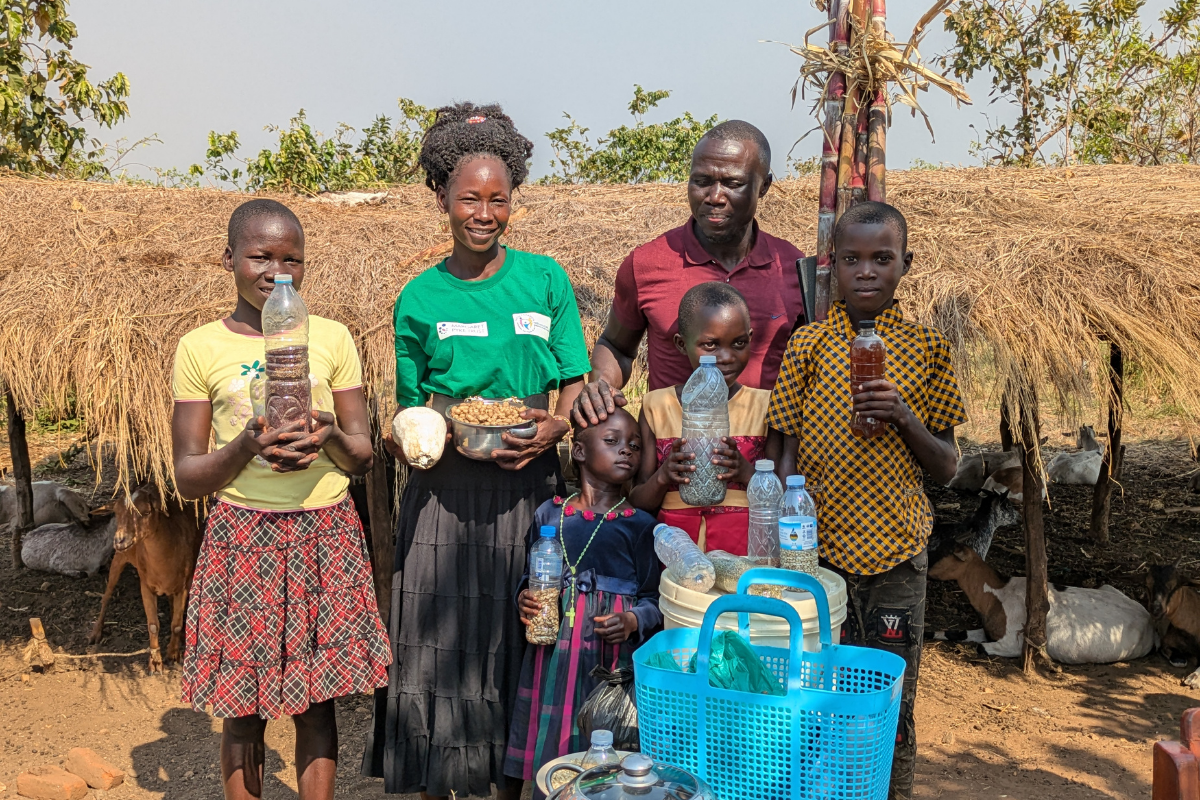
In 2015, World Renew and our local partner in Uganda, the Church of Uganda, Nebbi District, introduced a food security project in Gladys Uyirwoth’s community. After being encouraged to form self-help groups and strengthen bonds within the community, Gladys says her community decided to divide into three groups: the laughing group, the smiling group, and the crying group.
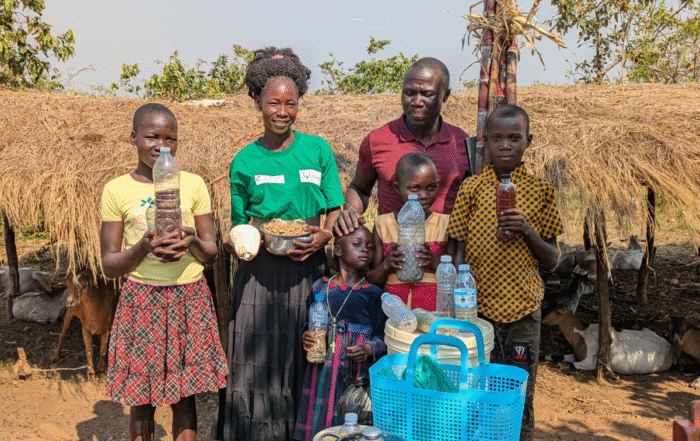
Gladys, her husband Dickson, and their children were struggling. The family could not afford three meals a day and often went hungry. Gladys says she felt ashamed that because of her family’s situation, she was assigned to the crying group.
Through the food security project, Dickson received training on Farmer-Managed Natural Regeneration (FMNR) and was selected to be a community facilitator. FMNR helps farmers—especially those who live in dry, tropical climates—by rebuilding lands for crops and grazing so that they are productive again.
Dickson took on this role with determination, sharing his knowledge with community members. Today, Dickson continues to be a facilitator not only within his community, but also in surrounding communities. One of Dickson’s students who successfully used the information he shared was his own wife, Gladys.
Taking what she learned from her husband, Gladys first set out to acquire land. She asked her father for support, and while he allowed her to farm on some of his fields, he encouraged her to purchase land of her own for long-term security. Gladys worked hard to implement the methods Dickson taught her, growing more crops from one harvest to the next. She set aside the profits she made selling the crops from her father’s land and eventually saved enough money to purchase her own plot.
Today, Gladys owns 26 acres where she grows a variety of crops, including sugarcane, fruit trees, soy, and cassava. She also breeds goats, chickens, and cows, and has several beehives. In addition, she has another 3.25 acres that she rents to others. And like her husband, Gladys has shared what she learned within her community. She has also been hired by several non-profits to facilitate training sessions in other communities.
Today, Gladys doesn’t belong to the crying group anymore. She wears a seemingly permanent smile that lights up her face. “We are beyond food secure,” Dickson says. “We have more than enough.”
Together with Canadian Foodgrains Bank, World Renew is working to help more families like Gladys and Dickson’s through long-term food security programs and locally led disaster response.
Each February, churches and donors across Canada support this work by raising funds around Canadian Foodgrains Bank Sunday—a time to give and learn about responding to global hunger. With matched funding, eligible gifts are multiplied up to 4X, reaching more families with immediate relief and lasting solutions.
In 2015, World Renew and our local partner in Uganda, the Church of Uganda, Nebbi District, introduced a food security project in Gladys Uyirwoth’s community. After being encouraged to form self-help groups and strengthen bonds within the community, Gladys says her community decided to divide into three groups: the laughing group, the smiling group, and the crying group.
Gladys, her husband Dickson, and their children were struggling. The family could not afford three meals a day and often went hungry. Gladys says she felt ashamed that because of her family’s situation, she was assigned to the crying group.
Through the food security project, Dickson received training on Farmer-Managed Natural Regeneration (FMNR) and was selected to be a community facilitator. FMNR helps farmers—especially those who live in dry, tropical climates—by rebuilding lands for crops and grazing so that they are productive again.
Dickson took on this role with determination, sharing his knowledge with community members. Today, Dickson continues to be a facilitator not only within his community, but also in surrounding communities. One of Dickson’s students who successfully used the information he shared was his own wife, Gladys.
Taking what she learned from her husband, Gladys first set out to acquire land. She asked her father for support, and while he allowed her to farm on some of his fields, he encouraged her to purchase land of her own for long-term security. Gladys worked hard to implement the methods Dickson taught her, growing more crops from one harvest to the next. She set aside the profits she made selling the crops from her father’s land and eventually saved enough money to purchase her own plot.
Today, Gladys owns 26 acres where she grows a variety of crops, including sugarcane, fruit trees, soy, and cassava. She also breeds goats, chickens, and cows, and has several beehives. In addition, she has another 3.25 acres that she rents to others. And like her husband, Gladys has shared what she learned within her community. She has also been hired by several non-profits to facilitate training sessions in other communities.
Today, Gladys doesn’t belong to the crying group anymore. She wears a seemingly permanent smile that lights up her face. “We are beyond food secure,” Dickson says. “We have more than enough.”
Together with Canadian Foodgrains Bank, World Renew is working to help more families like Gladys and Dickson’s through long-term food security programs and locally led disaster response.
Each February, churches and donors across Canada support this work by raising funds around Canadian Foodgrains Bank Sunday—a time to give and learn about responding to global hunger. With matched funding, eligible gifts are multiplied up to 4X, reaching more families with immediate relief and lasting solutions.